Food retail, new market entry
The shelf came last
A UK brand wanted Cyprus to understand ready to eat quinoa. Shoppers understood it perfectly well and avoided it anyway, and the reason was not the grain.
What they believed
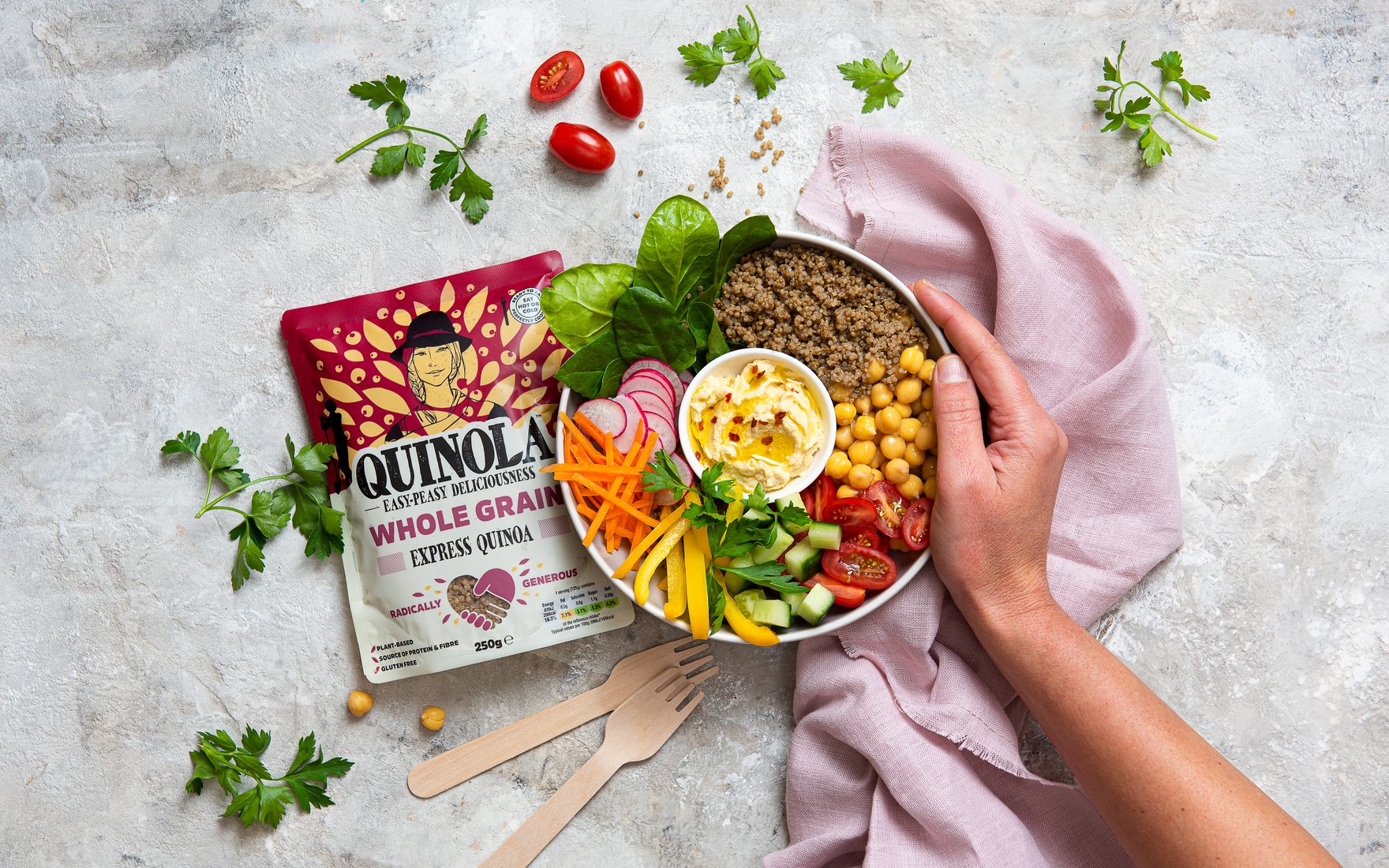
Quinola is ready to eat quinoa, grown and packed in France for a UK brand. The product worked at home. The question put to us, across the winter of 2020 and into 2021, was whether it would work here, and the belief underneath the question was that the job was explanation. Cypriot shoppers did not really know what quinoa was for. Teach them, get the product listed, and the rest would follow.
That belief sets the order of operations. It puts the shelf first and treats everything else as communication after the fact. It also hides a second assumption that nobody had tested: that the thing standing between a Cypriot shopper and this product is a gap in their knowledge.
What we did
We wrote a research plan before anything was ordered, and worked it in four passes.
We recorded prices for comparable products in shops and online. We ran two sessions with Cypriot shoppers, the second of them a taste test across the range. We put the resulting hypotheses to a survey of 421 Cypriot respondents, all of them local, and read the answers as a segmentation rather than as a verdict. And we used a price sensitivity method, Van Westendorp, to find the band the product could sit in before it was priced.
The sequencing is the point. Every one of those answers arrived while the decision to import was still reversible.
What the diagnosis found
An empty shelf is not evidence of demand. The price scan found no directly competing product in Cyprus apart from ready to eat rice. Read quickly, that is an open goal. Read properly, it is a question: a category with no competitors is either an opportunity nobody has noticed or a thing nobody wants, and the scan alone cannot tell you which.
Shoppers were not confused about quinoa. They were put off by cooking it. This is what the first session turned up and it inverted the brief. Quinoa was understood well enough. It was read as fiddly, slow and easy to get wrong, which is precisely why people who thought well of it still did not buy it. The product was not short of an explanation. It was the answer to a problem the brand had not been describing.
What people were buying was the time, not the grain. The survey put convenience above everything else, including price, and roughly four in ten respondents said they already ate ready made meals once or twice a week. The largest single reason given for buying them was not having enough time to cook.
That reorders the whole proposition. A brand that leads on the grain is competing with uncooked quinoa on a different aisle, where it loses on price. A brand that leads on the five minutes is competing with ready to eat rice, where the only other option in the category was plain.
There was a ceiling, and we found it before the first order. The pricing work produced a band rather than a number: below it the product read as too cheap to be what it claimed, above it the convenience stopped being worth paying for. Had that been discovered after landing stock, it would have been discovered as unsold stock.
What changed
The product went to retailers with its buyer and its price already evidenced, rather than as a proposition for the shelf to test. The pitch stopped being an argument about a healthy grain and became a demonstrated gap in ready made meals, with the segment described, sized and priced.
That is a different conversation with a buyer. A listing request backed by local research is answering the question a category manager actually has, which is not whether the product is good but whether anyone here will pick it up twice.
What happened
Quinola listed with five retail chains in Cyprus and held those listings through the first six months, which is the window in which a new import either earns its facing or loses it.
The finding outlived the launch. Convenience, not nutrition, stayed the centre of how the product was sold here, because that is what the research said the money was being spent on.
Written by Hivebreed. Cases describe the method and the judgment behind it, not the deliverables. Anything that would hand a client’s advantage to someone else is left out on purpose.